Laguna Niguel & South Orange County
Confident smiles begin with the right implant plan.
Explore dental implant options for one tooth, several teeth, or a complete smile — then request a personal consultation with a participating Laguna Niguel dental provider.
No two cases are the same, and nothing here replaces an examination. The purpose of this page is simply to help you understand your options before you sit down with a dentist.

- Requests go to
- Laguna Niguel Dental
- Location
- 28940 Golden Lantern, Suite H, Laguna Niguel, CA 92677
- About this website
Independent advertising website. Requests go to Laguna Niguel Dental, a participating provider. Learn more.
Before anything else
Treatment starts with an evaluation, not a quote.

No two implant cases are identical
The same missing tooth can call for very different treatment in two people, depending on what the bone and gums around it look like.
Bone health and your goals both matter
How much bone is present shapes what is possible. What you want to be able to eat, and how you want to look, shapes what is worth doing.
Pricing and timelines vary
A straightforward single implant and a full-arch case are different undertakings. Neither has a price that can honestly be quoted online.
A consultation is genuinely required
Candidacy cannot be assessed from a photograph or a form. It takes an examination and imaging.
Wondering where you might stand? Read what a dentist looks at when assessing candidacy.
Start where you are
Which of these sounds most like your situation?
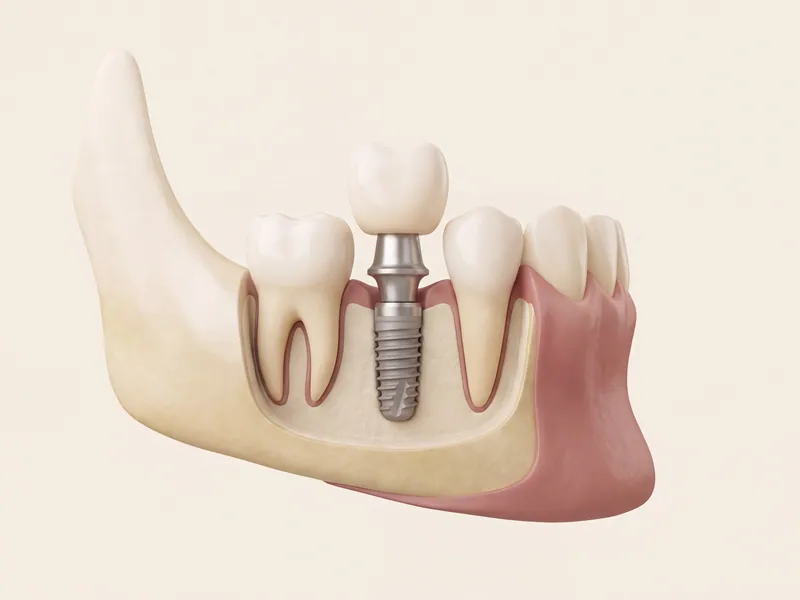
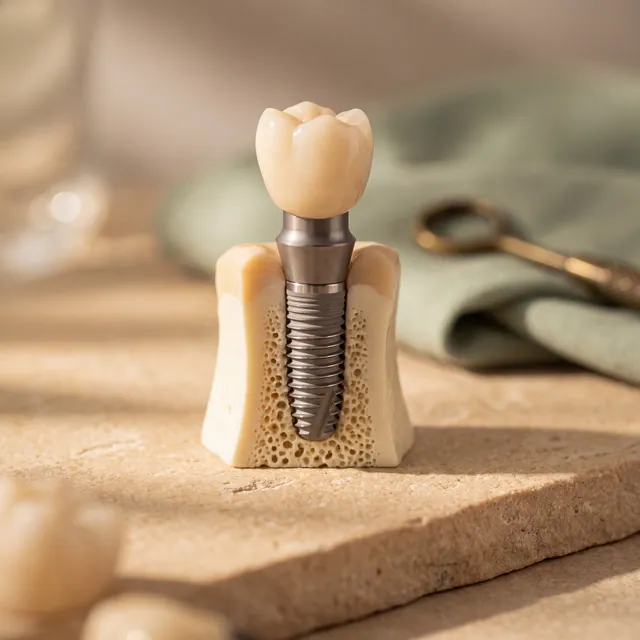
One missing tooth
Replace One Tooth
A single implant sits in the space where the tooth root was, and carries its own crown — so the teeth on either side are generally left alone.
This may fit if
- A tooth lost to fracture, decay or injury
- A gap that is visible when you speak or smile
- A tooth already missing for months or years
Because the implant is anchored in the bone rather than to neighbouring teeth, healthy adjacent teeth usually do not need to be reshaped.
See how this works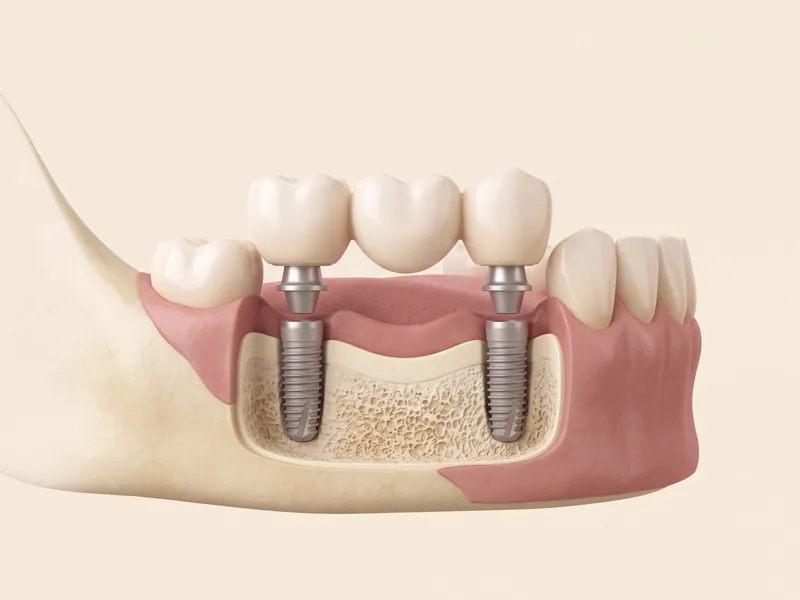
Several missing teeth
Replace Several Teeth
Two or more implants can support a bridge across a larger gap, without needing one implant for every missing tooth.
This may fit if
- Two or more teeth missing in a row
- An older bridge that is failing or no longer fits
- A partial denture you would rather not wear
Chewing is spread across implants set in bone, which many people find more stable than a removable partial denture.
See how this works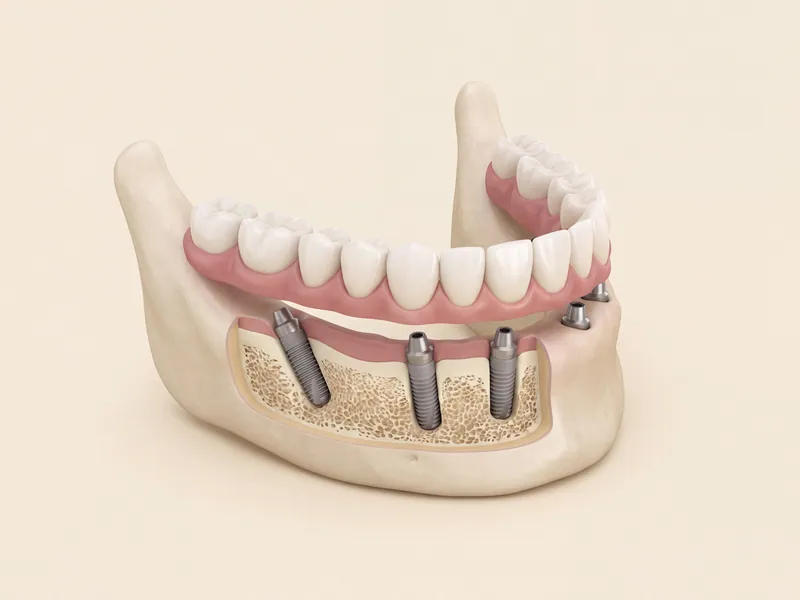
Loose dentures or a full arch
Stabilize Dentures or Restore a Full Smile
A small number of implants can hold a denture firmly in place, or support a fixed full-arch restoration that is not removed at home.
This may fit if
- A lower denture that lifts or shifts while eating
- Adhesives that no longer hold the way they used to
- All or most teeth missing in one or both jaws
Securing a denture to implants can improve stability while eating and speaking, depending on bone volume and the design chosen.
See how this worksFull Arch
Not sure which applies to you? That is exactly what a consultation is for.
Why people consider implants
What dental implants may offer
These are the reasons dentists commonly discuss implants with patients. Whether any of them apply to you depends on your own circumstances — which is a question for an examination, not a website.
- A restoration designed to look natural
- Crowns and bridges are shaped and shaded to sit alongside your own teeth. How closely a result matches depends on the surrounding teeth, gum contour and the materials chosen.
- Chewing function that feels more secure
- Because an implant is anchored in bone rather than resting on gum tissue, many patients report they can eat a wider range of foods than with a removable appliance.
- More stability than removable options
- Implant-retained restorations do not rely on adhesive or clasps. Stability still varies with the number and position of implants and with individual anatomy.
- Support for the bone that remains
- Bone in an area with no tooth root tends to reduce over time. An implant placed in that site transmits load into the bone, which can help maintain it.
- Neighbouring teeth usually left intact
- Unlike a conventional bridge, an implant does not require healthy adjacent teeth to be reshaped to act as supports.
- A plan built around your situation
- Bone volume, gum health, bite, general health and your own goals all shape what is appropriate. There is no single correct implant plan.
Individual results vary. Dental implant treatment carries risks, including the possibility that an implant does not integrate with the bone. A dentist will discuss the risks and alternatives that apply to your case before you decide anything.
What to expect
The path from first visit to final restoration
- 01
Consultation and evaluation
You describe what is bothering you and what you would like to be able to do. The dentist examines your mouth, reviews your medical history and discusses whether implants are a reasonable option for you.
- 02
Imaging and personalized planning
Three-dimensional imaging shows bone volume, nerve position and sinus anatomy. The dentist uses it to plan where an implant could be placed and what restoration it would carry.
Imaging may be arranged at the first visit or at a separate appointment.
- 03
Preparation, when it is needed
Some cases need a tooth removed, a site grafted, or gum health addressed before an implant can be placed. Not everyone needs this step.
Where preparation is required, healing time is added before placement.
- 04
Implant placement
The implant is placed into the jawbone, usually under local anesthesia. Aftercare instructions cover what to eat, how to clean the area and what discomfort to expect.
- 05
Healing and integration
The bone gradually forms a connection with the implant surface. A temporary restoration may be worn during this period so you are not left with a visible gap.
This phase is measured in months, and its length varies from person to person.
- 06
The final restoration
Once the implant is stable, impressions or scans are taken and the final crown, bridge or denture attachment is fitted and adjusted to your bite.
Timelines vary considerably. Some people move through these steps over a few months; others need preparatory treatment first, which extends the schedule. Your dentist can give you a realistic timeline once your imaging has been reviewed.
Who receives your request
The participating provider
Laguna Niguel Dental
Laguna Niguel Dental is an established dental practice in Laguna Niguel. Consultation requests submitted through this website are delivered to their team, who will contact you to arrange an appointment and answer your questions directly.
Practice details
- Address
- 28940 Golden Lantern, Suite H, Laguna Niguel, CA 92677Get directions(opens in a new tab)
- Phone
- (949) 363-2010
Cost and payment
What implant treatment costs, and why we do not publish a price
What the figure depends on
- How many implants are involved, and where in the mouth they sit
- Whether a tooth needs to be removed first
- Whether the site needs bone or soft-tissue work before placement
- The type of restoration — a single crown, a bridge, or a full-arch prosthesis
- The materials chosen for the restoration
- Diagnostic imaging and the planning the case requires
You will get a written figure before anything is scheduled. Laguna Niguel Dental reviews the plan with you and explains the full cost, so you can take it away and think about it. There is no obligation to proceed.
Financing and insurance
- Payment plans
- Many dental practices work with third-party financing companies that let patients spread treatment costs over time. Ask the practice at your consultation which options they currently accept, and what terms apply — approval and rates are set by the finance provider, not by the practice.
- Dental insurance
- Coverage for implants varies a great deal between plans. Some contribute toward part of the treatment, some cover only the restoration, and some exclude implants entirely. Annual maximums often cap what a plan pays in one year. The practice can review your specific plan with you.
This website does not quote prices, offer financing, or determine insurance benefits. All fees, payment arrangements and benefit questions are handled directly by Laguna Niguel Dental.
Common questions
Questions people ask before their first consultation
Am I a candidate for a dental implant?
Many adults who are missing one or more teeth can be considered for dental implants, but candidacy is decided case by case. A dentist generally looks at the health of your gums, how much bone is available where the tooth is missing, your general health and any medications you take, and how you would like to chew and speak day to day.
Some people are candidates right away. Others may need preparatory treatment first, or may be better served by a different option. The only way to know is an in-person evaluation that includes imaging.
How long does the process take?
Timelines vary widely. A straightforward single implant with healthy surrounding bone may move from placement to final restoration over a period of several months, because the implant needs time to integrate with the bone before the final crown is attached.
Cases that involve extraction, grafting or several teeth can take longer. Your dentist can give you a realistic schedule for your specific situation once imaging and an examination are complete.
Is implant placement uncomfortable?
Implant placement is usually performed with local anesthesia so the area is numb during the procedure. Many patients describe the appointment itself as more manageable than they expected.
Some soreness, swelling or bruising afterwards is common, and your dentist will discuss what to expect and how discomfort is typically managed. Individual experiences differ, and no dental procedure can be described as free of discomfort for every patient. If anxiety is a concern for you, raise it at the consultation — sedation options may be available.
How much do dental implants cost?
There is no single price, because an implant is not a single item. The total depends on how many implants are needed, whether imaging, extraction or bone work is required, the type of restoration placed on top, and the materials used.
For that reason this website does not publish a price. The participating provider reviews the specific plan with you and explains the full cost in writing before any treatment is scheduled, so you can make a decision with complete information.
Does insurance cover implants?
Coverage varies considerably between plans. Some dental plans contribute toward part of implant treatment, some contribute toward the restoration but not the implant itself, and some exclude implants entirely. Annual maximums often limit what a plan pays in a single year.
The provider can review your plan details with you and help you understand what your benefits may contribute before you commit to treatment.
Can implants help stabilize dentures?
Yes, this is a common reason people ask about implants. A small number of implants can be used to hold a denture firmly in place, which many patients find more secure than a denture that rests on the gums alone.
Some designs allow the denture to be removed for cleaning while still snapping securely into place; others are fixed and removable only by the dentist. Which approach may suit you depends on bone volume, your goals and your budget, and is decided together with your dentist.
Request a consultation
Ask about your options. Nothing is committed.
A consultation is where you find out whether implants make sense for you — and what they would involve. You are not agreeing to treatment by asking.
- 1
You send this form
Only the details below. We never ask for medical history, insurance numbers or anything about your health online.
- 2
Laguna Niguel Dental receives it
Your request goes to the practice named in the disclosure below, and to no one else. It is not sold or shared with other advertisers.
- 3
They contact you
Usually within one business day, using the method and time you choose. You can ask questions before booking anything.
Would you rather just talk to someone?
(949) 363-2010When you are ready
Take the next small step.
A consultation is a conversation about what is possible — not a commitment to treatment. You will leave knowing your options, what each would involve, and what it would cost.
Prefer to talk it through first? Call Laguna Niguel Dental on (949) 363-2010.
Independent advertising website. Requests go to Laguna Niguel Dental, a participating provider. Learn more.